

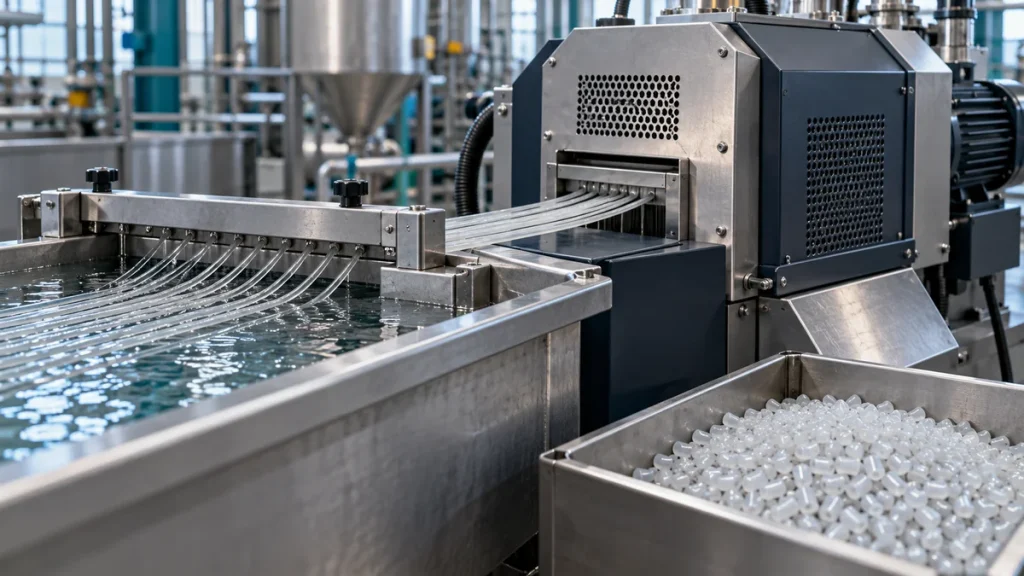
An irregular pellet sample is a starting point for investigation, not a diagnosis. Short pieces, joined pellets, fines and uneven lengths can look similar across different production events. Describe the visible defect first, identify the sample and connect it to the operating record before choosing a maintenance action.
Create a useful sample record
Label the material grade, batch, machine, collection point and time. Photograph the sample with a suitable scale and preserve a representative portion under your site’s sample procedure. Avoid selecting only the most dramatic pieces; the receiving team needs to understand the overall sample as well as the unusual features.
Use consistent descriptive terms between shifts. State whether the concern is pellet length variation, attached material, fines or another measurable feature. If the complaint comes from a customer, retain their original description and sample reference alongside the plant’s observation.
Divide the process into observation zones
For a strand system, organize the review around strand formation, conditioning and delivery to the cutting stage. MAAG’s strand and pelletizing system descriptions provide a useful reminder that the cutter operates within a broader arrangement. The relevant evidence may therefore begin before the pellet leaves the cutting chamber.
Ask operators to record observations only through approved viewing points. Do not inspect moving cutting parts or bypass guarding to obtain a better image. Internal checks, blade work and component adjustment require qualified personnel following the specific machine instructions and safe isolation procedure.
Use a symptom sheet without assigning a cause
| Symptom | Evidence to add before diagnosis |
|---|---|
| Length variation | Identified sample and relevant operating trends from the same period |
| Fines or irregular edges | Sample photographs and the documented cutter maintenance history |
| Joined or distorted pellets | Material identity and available conditioning and downstream records |
| Intermittent appearance | Event timing, changeover notes and an acceptable comparison sample |
This sheet is a request for evidence, not a list of proven causes. It helps a supplier decide what to examine next without embedding an unsupported repair instruction in the original complaint.
Review the exact maintenance configuration
Record the pelletizer model, installed part references and the date of the last approved service. Where the cutter has received replacement or refurbished parts, include the relevant records. MAAG’s maintenance offering illustrates the role of inspection in service planning, but the applicable tolerances and procedures remain specific to the installed equipment.
If a supplier recommends a part inspection or controlled process test, record the finding before moving to the next action. Keep process changes and mechanical service traceable. An improvement after multiple simultaneous interventions does not reveal which intervention addressed the original issue.
Define what an acceptable result means
Use the agreed pellet specification and sampling method to assess the result after corrective work. Compare representative samples under identified conditions rather than relying on a quick visual impression. Record whether the conclusion applies to one grade or to the wider material range.
For a new project, our pelletizing lines overview can help frame system scope. For an installed cutter, consult the after-sales and spare-parts checklist before sending a support request, so the machine and affected parts are identified clearly.