

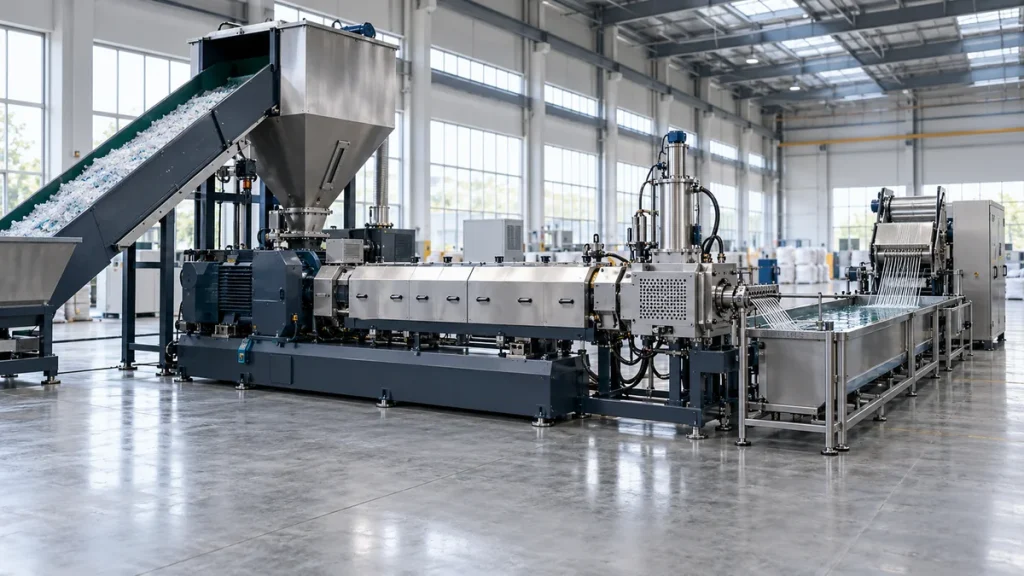
A plastic pelletizing line quotation is useful only when the proposed machine matches the material you actually have. Two offers with the same headline capacity can include different preparation equipment, filtration arrangements and downstream systems. Before asking for a price, give every supplier the same written basis for selection.
Describe the material as a range
Identify the polymer, source and physical form. Separate clean production scrap from washed post-consumer feed, and distinguish film, flakes, regrind and powder. Include representative photographs and explain how the material arrives at the hopper. A convenient laboratory sample should not stand in for the full variation of a commercial supply stream.
Ask your own team what changes between deliveries. Record known moisture, contamination, bulk density and composition data together with the sampling method. Where a value is unknown, mark it as requiring a trial. A blank field invites an assumption; a clearly stated uncertainty gives suppliers something to resolve.
Define the pellet you need to sell or use
Write the intended application before specifying machine size. Agree which output properties matter to the next process, how samples will be taken and who will evaluate them. Do not rely on the word “good” as an acceptance criterion. A sample approval should identify the feed batch, operating condition and test method behind the result.
Material preparation can be a substantial part of a recycling system, as illustrated by EREMA’s integrated preconditioning approach. Compounding likewise involves more than melting alone; feeding and downstream operations form part of the process described by Coperion. These examples support checking the entire proposed flow rather than comparing the extruder in isolation.
Use a supply boundary table
| Boundary | Question for the quotation |
|---|---|
| Upstream | Which sorting, size reduction, drying and feeding equipment is included? |
| Extrusion | What filtration, degassing and control functions are proposed for this feed? |
| Downstream | Are cooling, cutting, drying, conveying and packing included? |
| Site interfaces | Who supplies utilities, foundations, wiring and installation work? |
For every item, label it included, optional, buyer-supplied or excluded. Request a layout drawing that uses the same equipment names as the quotation. This makes it easier to notice a missing transfer conveyor or a utility package that appears only in a separate document.
Compare operating assumptions before prices
Request the material and conditions behind any capacity statement. Clarify whether the figure describes feed input, finished pellets or a particular trial. Ask how start-up material, screen changes and cleaning are treated in any operating estimate. Supplier-specific figures should remain tied to their stated conditions.
Keep a short assumptions register beside the comparison sheet. When one supplier revises the feed requirement or adds a drying stage, circulate the same revised requirement to the others. This reduces the risk of selecting a lower price that answers a different question.
Finish with a verification plan
Before an order, turn the unresolved assumptions into an agreed trial or inspection plan. Identify the material quantity, test location, records, sample handling and actions for an unsatisfactory result. Keep commercial terms and technical acceptance consistent across the final documents.
Use our pelletizing and compounding lines overview to frame the equipment scope, then review how a sourcing project is coordinated. A clear RFQ does not choose a supplier for you, but it gives each offer a fair basis for review.