

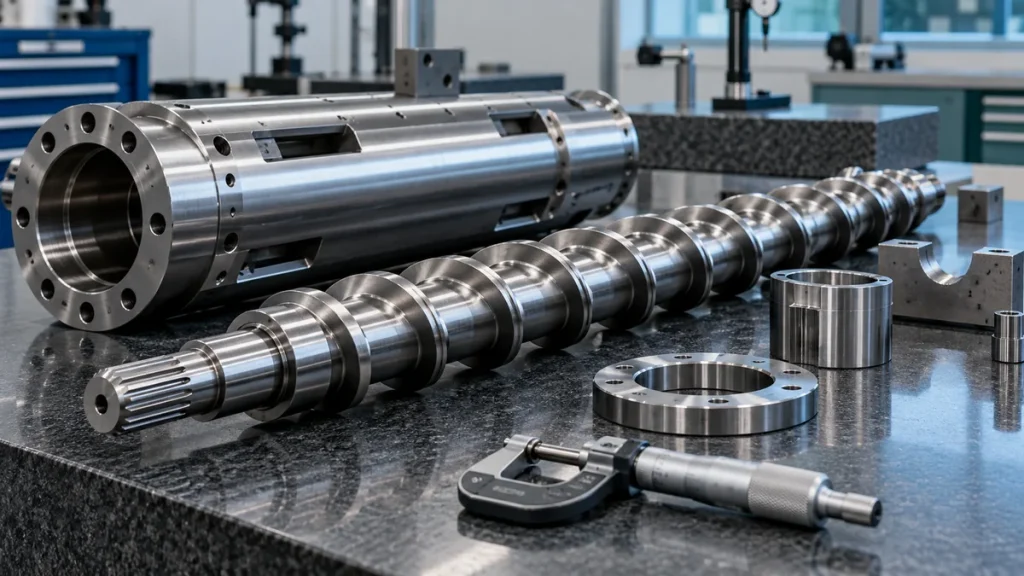
A decline in extrusion performance can justify an investigation, but it does not prove screw or barrel wear. Material changes, operating conditions and other equipment issues can produce overlapping symptoms. A defensible service decision combines operating history with measurements interpreted for the exact machine configuration.
Build a comparable operating baseline
Select a known acceptable operating case and identify the material, formulation and product requirements behind it. Record the available output and process trends using the same definitions as the current case. Comparing different grades or different measurement periods can create an apparent change that has little diagnostic value.
Graham Engineering discusses operating indicators that may accompany extruder wear, including changes in output-related behavior. Treat such indicators as reasons to investigate. They should not be converted into an automatic replacement rule without checking the surrounding process and obtaining the appropriate technical assessment.
Request an identified measurement report
Coperion describes wear diagnostics using measurement and assessment of extrusion components. For a buyer or maintenance coordinator, the key document is the report: it should identify the equipment, component positions, measurement method and the reference used to interpret the findings.
Ask how the measurement locations are mapped to the screw and barrel arrangement. A loose list of dimensions is hard to use if the installed sequence or component identity is unclear. Preserve the report with drawings and previous inspection records so later measurements can be compared on a consistent basis.
Avoid universal clearance limits
| Question | Record needed |
|---|---|
| What was inspected? | Machine, component identifier and installed position |
| How was it assessed? | Method, measurement locations and report reference |
| What limit applies? | Manufacturer-approved criterion for this configuration |
| What changed over time? | Comparable earlier measurements and operating history |
Do not apply a clearance, inspection interval or refurbishment allowance copied from another machine. Materials of construction, process duty and component design can differ. The qualified supplier should explain the criterion used and any uncertainty in the assessment.
Turn the finding into an options review
Separate the inspection conclusion from the commercial choice. A service proposal should identify which components are affected, the proposed work and how compatibility will be confirmed. Compare repair, replacement and further monitoring only where the responsible technical team considers them appropriate.
Request the expected documentation for the chosen route: part references, inspection results, approved drawings and any required checks after installation. Use the same identifiers in purchase requests and maintenance work orders. This reduces the risk of treating visually similar components as interchangeable.
Plan the work and verify the return to service
Removal, inspection and reassembly belong to qualified personnel under the equipment instructions and the site’s isolation procedures. The article is a planning framework, not a disassembly guide. Agree the work scope, required resources and acceptance checks before scheduling the shutdown.
After approved work, record the configuration and compare the agreed operating case with the earlier baseline. Retain the evidence even if the investigation concludes that another part of the process caused the original complaint.
Use our spare parts page to organize identification details, and after-sales coordination to discuss the records needed for a supplier review.