

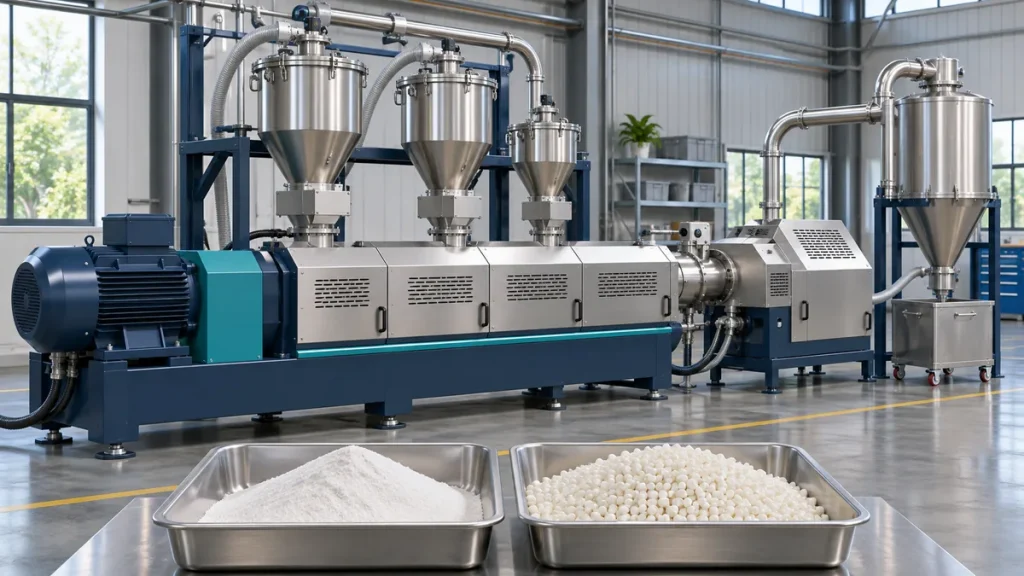
A PVC pelletizing line should be specified around the compound it must make. Rigid and flexible formulations can differ in ingredients, material handling and the processing window. “Suitable for PVC” is therefore a starting description, not a complete equipment specification.
The important questions concern preparation, feeding, mixing, pressure generation and cutting. Those duties need to work together while respecting the formulation’s sensitivity to its processing history.
Describe the compound before comparing machines
Identify the intended application and whether the plant will run rigid, flexible or several classes of PVC compounds. Provide the relevant formulation and material information through the supplier’s agreed technical review process.
Powders, plasticizers, fillers, stabilizers and other ingredients create different feeding requirements. The chosen preparation method also determines the condition delivered to the compounding section.
A large operating range is useful only when the proposal explains the grades and conditions it covers. Avoid treating a demonstration on one easy formulation as proof of the full commercial range.
Pre-mixing and feeding belong in the process scope
Clarify whether the line receives a prepared dry blend or whether the project includes ingredient handling and mixing equipment. Define who controls each ingredient’s delivery and proportion.
The arrangement must accommodate the actual powder behavior and other ingredients. Bulk density, flow and entrained air can affect how reliably material enters the process.
A supplier’s feeding solution should be evaluated for that duty. Choosing a nominal hopper volume or screw size without the material context leaves a major part of the process unresolved.
Separate mixing duties from pressure-building duties
Some PVC compounding systems divide these jobs between sequential units. For example, a compounder can carry out the assigned mixing and treatment while a downstream discharge unit builds the pressure required by the pelletizing system.
The purpose of that split is specific to the proposed process. It should not be confused with the term “two-stage” used in a different recycling-line context.
Ask the supplier to show the material route and explain the duties of each unit. Then assess the combined system against the formulation, required output and quality criteria.
| Process area | Requirement to clarify |
|---|---|
| Blend preparation | Incoming form, homogeneity and temperature/handling conditions |
| Feeding | Ingredient proportions, delivery stability and applicable powder behavior |
| Compounding | Required distribution, homogenization and material treatment |
| Discharge | Pressure-generation duty and connection to the cutter |
| Pelletizing | Cutting behavior, pellet specification and cooling arrangement |
| Finished material | Outlet condition, handling and acceptance tests |
Keep the thermal and shear history visible
PVC processing needs attention to the formulation’s heat and shear sensitivity. The equipment, screw configuration and operating method should be selected for the actual material.
A higher screw speed or temperature is not a general answer to a production limitation. Process changes require the responsible technical team’s assessment of material and equipment conditions.
Likewise, a larger motor does not establish better compound quality. The trial needs to demonstrate the specified result, not only a high discharge rate.
Match the pelletizing method to the compound
The cutter and its surrounding system must suit the material’s behavior. Relevant questions include how the material reaches the die, how it is cut, how pellets are cooled and how they are conveyed without compromising the specified product.
Some PVC packages use specifically designed dry-cut or eccentric pelletizing arrangements. Other proposals may use a different route for a defined application. Evaluate the complete package rather than assigning one cutting method to every PVC formulation.
Include the necessary access, changeover and maintenance requirements in the comparison. These affect how the line will support the planned product range.
Specify the quality evidence before the trial
Choose the material tests and appearance requirements with the receiving process. They should reflect the intended application and agreed specification.
Keep sample identity, formulation reference, operating case and test conditions together. If an ingredient or process change was needed during the trial, record it as part of the result.
The trial should also identify accepted output, transition material and the installed equipment scope. A test that uses preparation or downstream equipment excluded from the offer needs that difference explained.
Our factory acceptance test checklist helps structure the agreement without imposing a universal PVC recipe or operating sequence.
Compare offers on the same compound range
Send suppliers the same application requirements, formulation scope, output definition and site information. Ask them to identify the grades demonstrated and any conditions requiring further trials.
For a project covering both rigid and flexible materials, clarify changeover responsibilities and the components or settings that differ. A broad capability statement should be translated into a usable operating scope.
The pelletizing-line overview and RFQ scope checklist provide a place to organize that inquiry. Extruder China can help connect the project brief with suitable machinery suppliers through the inquiry form.