

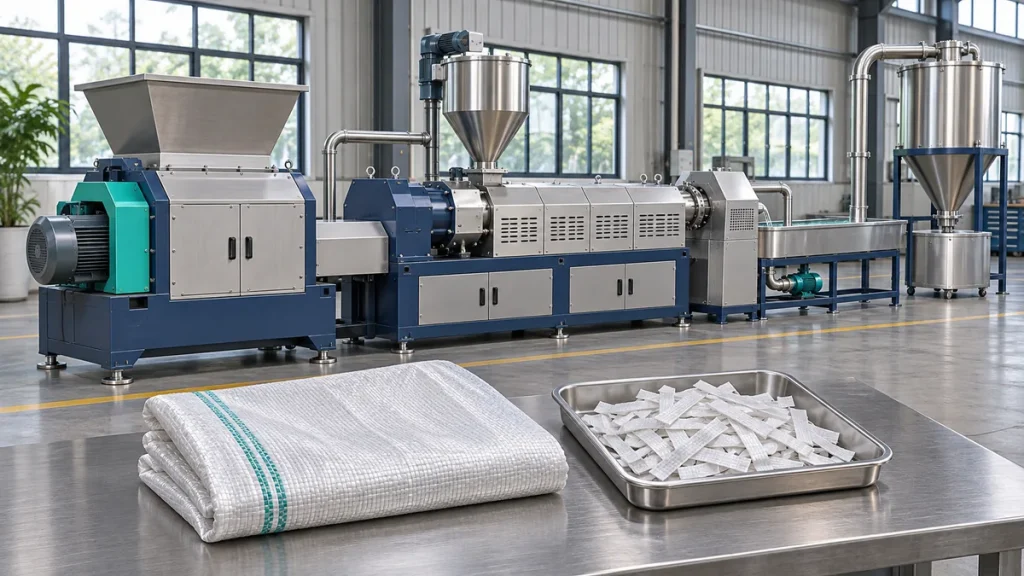
PP woven-bag recycling starts with a deceptively simple question: what is in the bag pile? Clean weaving scrap, printed sacks and used bulk bags may all contain polypropylene, but their preparation and quality requirements can be far apart.
The long, tough material form also matters. A machine that processes neatly sized rigid regrind may not accept sacks, tapes and fabric in the same way. Treat the feedstock as a distinct project input before selecting a pelletizing line.
Separate production scrap from used sacks
Factory raffia trim and weaving offcuts can have a relatively well-known material history. Collection and storage still need to keep them within the agreed condition.
Used sacks and bulk bags introduce questions about previous contents, dirt, attachments, coatings and other materials. Document what is known and identify what must be excluded from the permitted feed.
Do not assume that a washing or extrusion line makes an unknown residue acceptable. The equipment route needs an approved material scope and appropriate handling arrangements.
Look at the bag construction, not only the PP label
Woven fabric, loose tapes, liners and attachments can create different material streams. Some products also include printed or coated surfaces. Describe the construction and the proportion of the fractions that will enter the line.
If a component will be separated before processing, show that step in the plan. A supplier should not have to infer the actual feed composition from a photograph of a complete bag.
This is also important for sampling. A small piece cut from a convenient clean section may not represent the full bag or the commercial collection stream.
Plan size reduction and feeding together
Large flexible pieces can be awkward to load and transfer. The preparation system must reduce the material into a condition the next section can accept consistently.
Shredder-integrated extrusion is one available architecture for certain woven, fibrous and bulky scrap. Other routes may use separate preparation and feeding units. The decision should consider input dimensions, toughness, loading method and the supplier’s stated material limits.
Ask to see the permitted material size and the normal loading arrangement. “No pre-shredding” is meaningful only within a defined machine and feedstock scope.
Where a separate shredder is supplied, agree the output condition at its connection to the feeding system. Keep that interface visible in the quotation.
Put washing and melt treatment in the correct places
The need for washing follows the contamination and intended pellet application. Clean production material and used sacks should not be assigned one universal route.
After any washing step, identify the material condition delivered to extrusion. Residual water and inconsistent preparation can affect the duty of the downstream equipment.
Melt filtration addresses the solid contamination the selected system is designed to capture. Devolatilization deals with another set of material conditions. Neither should be described as an all-purpose replacement for sorting or washing.
If printing or coating is present, have the supplier explain the expected treatment and the tests needed to evaluate the pellets. Avoid accepting a machine configuration based only on the number of vents or filters listed.
Define what makes the recycled pellet usable
The desired application determines the acceptance basis. Reusing a material in another process requires more information than whether it has been cut into pellets.
Agree the relevant material tests, contamination limits and appearance requirements with the receiving team. Where reuse in raffia or another demanding application is intended, the assessment should include the performance required by that actual process.
Do not treat a supplier’s reuse claim from one material trial as proof that every used sack stream can be returned at the same proportion.
Make the trial represent the planned feed
A useful material package contains the typical fabric and tapes, the expected sizes and the normal variation in cleanliness or printed content. State what preparation has already occurred.
During the agreed trial, connect the collected pellet samples to the feed batch and operating period. Record accepted output, interruptions and material removed by the process.
If the project includes several bag sources, evaluate how they differ. Combining the results into one headline figure can hide the material that presents the most important processing question.
The factory acceptance test checklist helps formalize the agreed case and the evidence to retain.
Prepare the material brief before the equipment list
Include bag construction, source, previous-use information, preparation method, representative photographs, target output and intended pellet application. Identify any existing washing, shredding or handling equipment.
From there, the supplier can propose a recycling and pelletizing route with explicit interfaces. Use the RFQ checklist to check what is included, and send the material brief through the project inquiry form for supplier matching.